
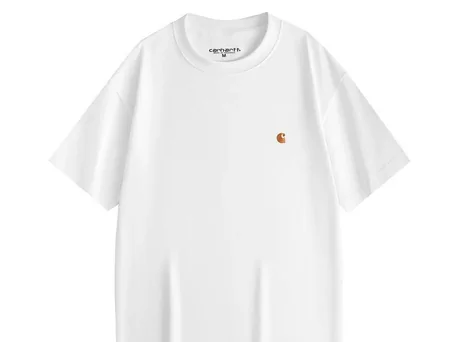
T-shirts
Usually the lightest thing in an order. Two or three tees rarely change the size of the box, which makes them the best last-minute additions.
CategoryAll sixteen parts of the product catalogue, with a photo from a live listing on each card. The notes come from thinking about the box every item will end up in, because that is where buyers abroad gain or lose money.
Shops sort clothes by where they go on the body. A parcel does not care about that. It cares about grams, about the space an item claims in a box, and about whether a line will carry it at all. So the cards below are grouped by behaviour in transit rather than by outfit.
Soft, light pieces come first: tees, hoodies, joggers, football shirts and the women’s search. Coats sit at the end of that group because they are light but greedy for room. Dense goods such as denim and belts follow. Then come the boxed items, where the packaging is part of the cost: trainers, watches, glasses, perfume and jewellery. Bags and caps have shapes to protect, and electronics close the list because batteries change which lines are open to you.
Each card opens the matching rack of the live catalogue. Nothing on this page is a fixed stock list.

Labels are plain on purpose. The note under each photo is the one thing worth knowing about that rack before you add something from it to a parcel bound for another country.
Usually the lightest thing in an order. Two or three tees rarely change the size of the box, which makes them the best last-minute additions.
Category
Heavy fleece adds up quickly. Check whether the listing names the fabric weight, and expect a zipped hoodie to weigh more than a pullover.
Category
Close to a hoodie on the scale. Brushed fleece versions are warmer and heavier than the thin summer cut.
Category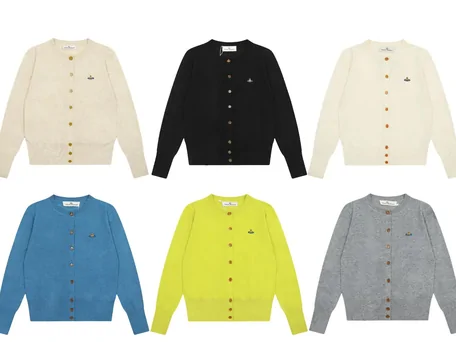
A keyword search sits behind this card rather than a category, so knitwear, coats, heels and handbags arrive mixed. Read each listing for what it really is.
Search results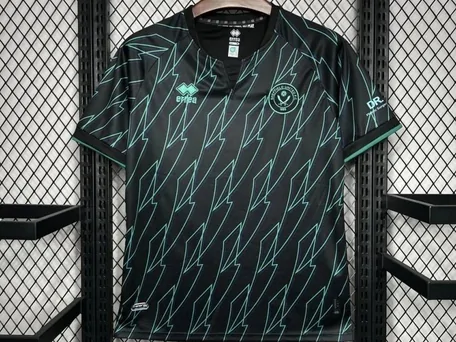
Thin polyester that weighs very little and folds small. Printed names and numbers sometimes cost extra and add time.
Category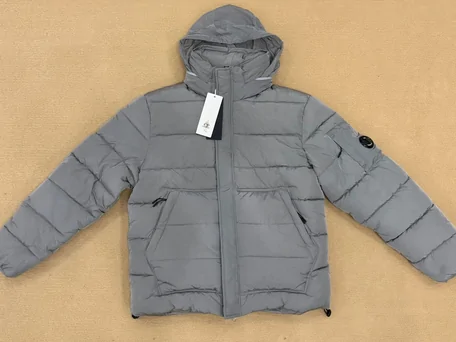
The classic bulk problem. A padded coat can make the box huge while barely moving the scale, so ask whether it can be packed flatter.
Category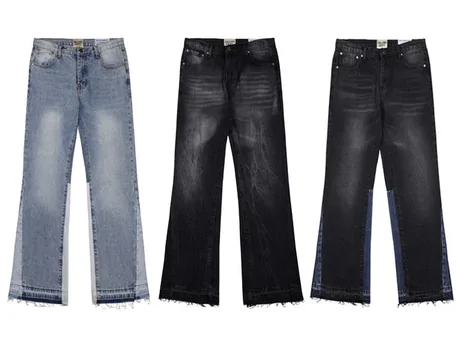
Heavy cotton in a small fold. In a parcel of jeans, the weight on the scale tends to decide the price.
Category
Buckles are dense metal, and belts often come coiled in a rigid gift box. Without the box a belt takes little space.
Category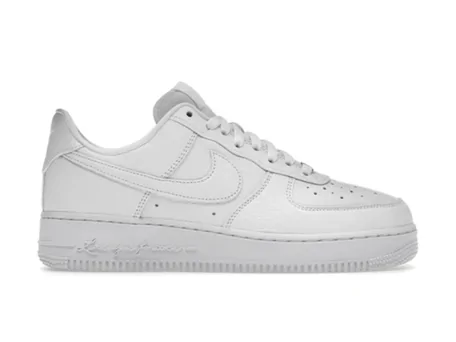
The shoebox is the question. It protects the shape but can double the space a pair needs, and some buyers simply want to keep it.
Category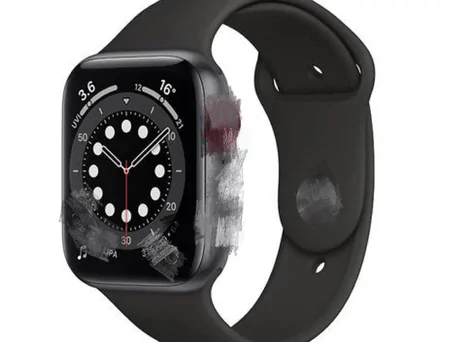
Small and light, but often packed in a hard case. Smart watches carry batteries, which narrows the lines that will take them.
Category
Frames bend and lenses scratch. A rigid case is worth its few grams, and it is worth checking the warehouse photos for a crushed case.
Category
Liquid in glass. Many lines will not carry it, and the ones that do expect it flagged as a liquid at booking and padded well.
Category
Tiny and light, but easy to lose inside a big box. Ask for small pieces to be bagged together and photographed.
Category
Structured bags arrive stuffed with paper and wrapped in a dust bag. That keeps the shape and also fills the box.
Category
A crushed peak does not recover well. Caps nest inside one another, so several in one parcel cost little extra space.
Category
Anything with a battery limits your choice of line, and power banks are the strictest case. Check line rules before you order, not after.
CategorySellers choose the category for their own listings, and they do not always choose well. When we pulled pages five to seven of several racks on 20 October 2026 to choose the photos on this page, the women’s search returned high heels, slides and handbags among the cardigans, and one card on the outerwear rack was a collage of a dozen jackets with a seller’s QR code printed in the middle.
So read the listing title and the photos, not the rack name. If a card shows several items in one picture, the listing is probably a menu of options, and the price shown may belong to the cheapest one. The listing page tells you which option you are actually ordering.

Many catalogue photos are the seller’s own marketing images, and sellers print things on them. On the racks we pulled we saw size charts stamped across T-shirt photos, model numbers in large type across trainer collages, and one electronics photo inviting buyers to message the seller privately for a lower price.
Printed size charts are useful, but treat the numbers as the seller’s claim and check them against the warehouse photos later. Printed invitations to chat or pay outside the platform are a different matter: buying through an agent only protects you while the order stays inside the agent’s system, so ignore them.

A simple routine works for most buyers abroad. Browse the racks and keep a short list. Before ordering, sort the list into the groups above and ask how many boxed or bulky items it holds. Order, then wait for the warehouse to record what each item weighs once it arrives.
Then open the box planner, type in those weights and a likely box size, and see whether one item is pushing the parcel into a higher charge. If it is, you can still decide to send it separately or leave its packaging behind. Starting from a quick search for a lightweight jacket instead of a padded one is another way to keep the box small.
