Matching a CNFans parcel to a shipping line that fits
A line is the service that carries your parcel out of China and hands it to someone who can deliver in your country. Lines differ in speed, price, tracking, size limits and the goods they accept. Here is how to tell them apart.
Three families of line you will meet
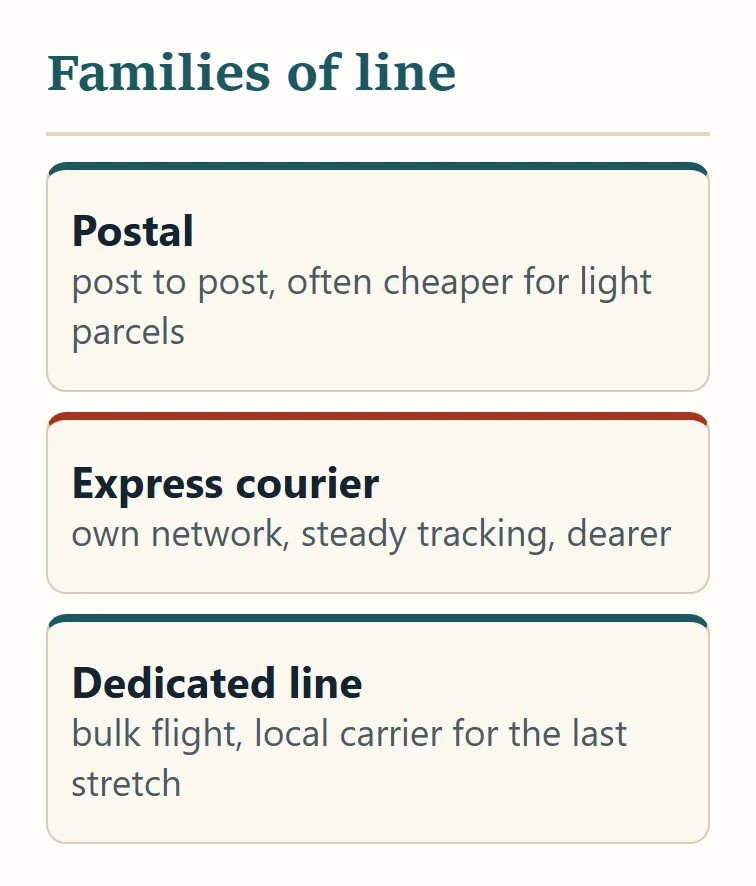
Postal lines travel through national postal services: China’s post hands the parcel to the post in your country. They are often among the cheaper choices for light parcels, with tracking that can go quiet between the two countries.
Express couriers carry the parcel on their own network from pick-up to your door, usually faster and with steady tracking, at a higher price per kilogram and with stricter bulk rules.
Dedicated lines, sometimes called special lines, are run by logistics companies that fly parcels in bulk to one country or region and pass them to a local carrier for the last stretch. They often sit between the other two on price and speed and are usually limited to certain destinations.
The archived CNFans footer from 23 August 2026 showed DHL, FedEx and China Post logos. Logos tell you which carriers appeared, not which lines serve your address.
Reading the “150 + shipping lines” claim
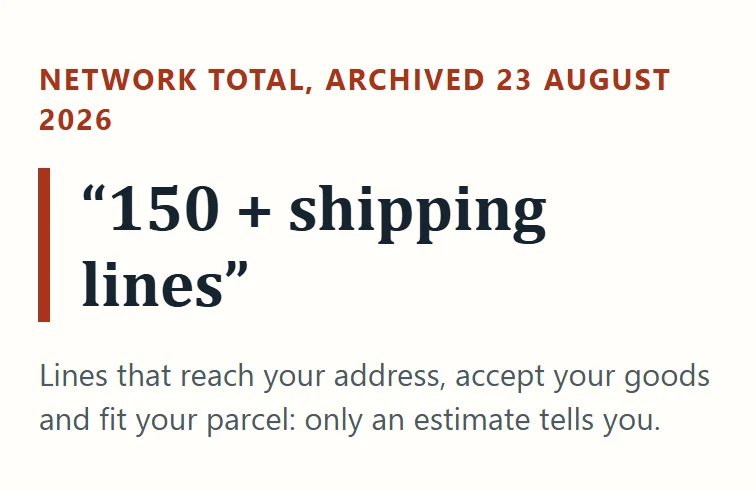
The ordering strip on the archived CNFans front page ended with “INTL ship” and the promise of a “cheaper line with more 150 + shipping lines”. It is a count supplied by the operator, captured on 23 August 2026, and it describes the whole network, not one country.
For a buyer in a particular place, the useful number is the handful of lines that serve that address, accept everything in the parcel and fit its weight and size. That might be many, or it might be three. You only learn it from an estimate for your own parcel, which is why the estimate matters more than the headline.
Each line of an estimate, field by field
CNFans had its own Estimation page, linked from the top menu and introduced on the front page as Shipping Estimate with the words “Multiple international logistics providers”. Like every other address on cnfans.com it was replaced by the maintenance page on our 20 October 2026 visit.
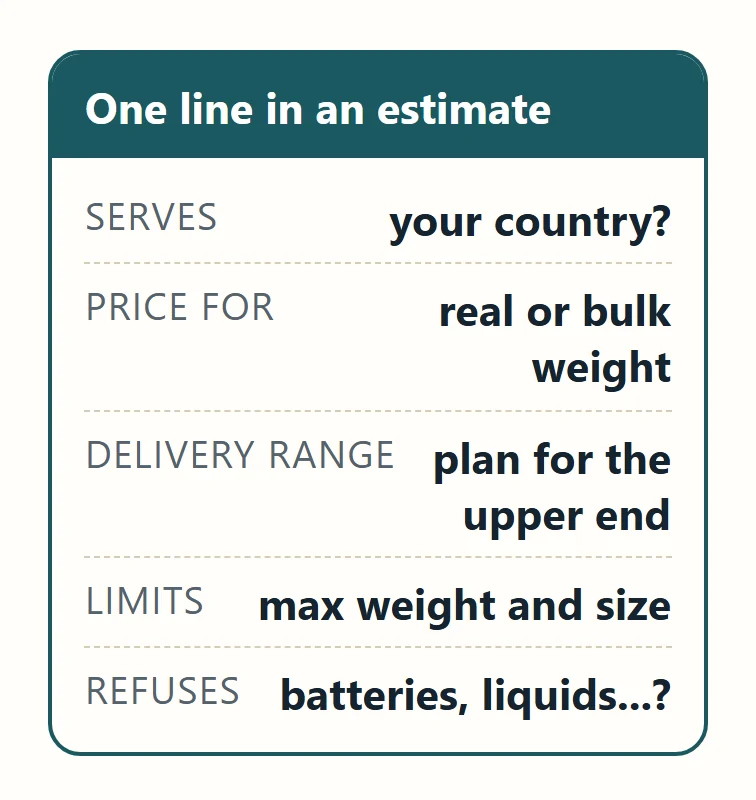
Whatever tool you use, read each line in the estimate the same way: the destinations it serves, the price for your weight, whether that price is by real or bulk weight, the delivery range in days, the weight and size limits, and the goods it refuses. A low price with an excluded item is not an option.
The catalogue’s own product pages carry a rough shipping panel too. On the pages we opened it asked for a destination country first and said plainly that the final figure comes after the parcel is weighed at the warehouse. Treat any figure before weighing as a rehearsal.
Speed, price or tracking: decide which one leads
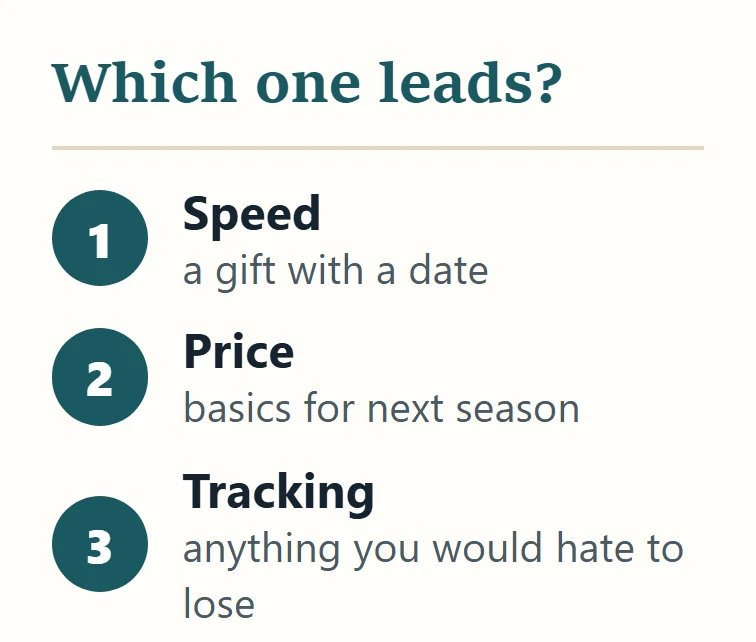
You rarely get all three. Before looking at the list, decide which matters most for this parcel. A birthday present needs speed. A box of basics for next season needs price. Anything you would hate to lose needs tracking you can follow end to end.
Then use the second priority to break ties. If two lines are close on price, the one with continuous tracking is worth a little more; if two are close on speed, choose the one whose local carrier you already know delivers to your street reliably.
Delivery ranges are estimates. Treat the upper end as the realistic one and plan around it.
When a route to a whole region pauses
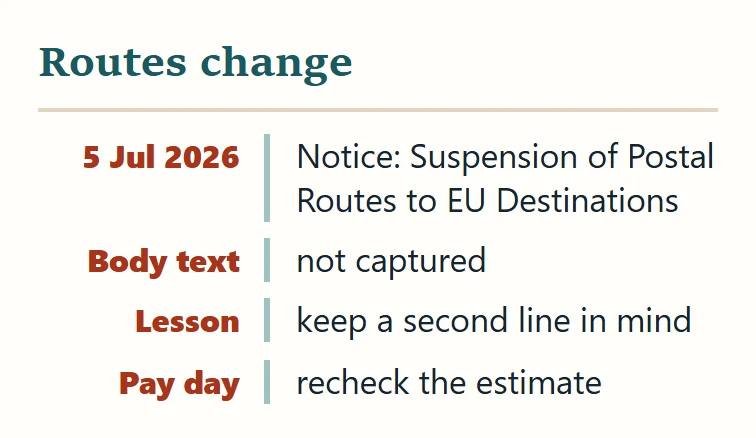
Lines are not permanent. On 5 July 2026 the announcement bar across the top of cnfans.com read “Notice: Suspension of Postal Routes to EU Destinations”. The full text of that notice was never captured, so we know the headline, not the scope or how long it lasted.
The lesson is general. A route can stop for a region at short notice, and the line you used last time may not be there when this parcel is ready. Keep a second choice in mind, recheck the estimate on the day you pay, and avoid buying something you can only ship on one particular line.
The hand-over: tracking numbers and local carriers
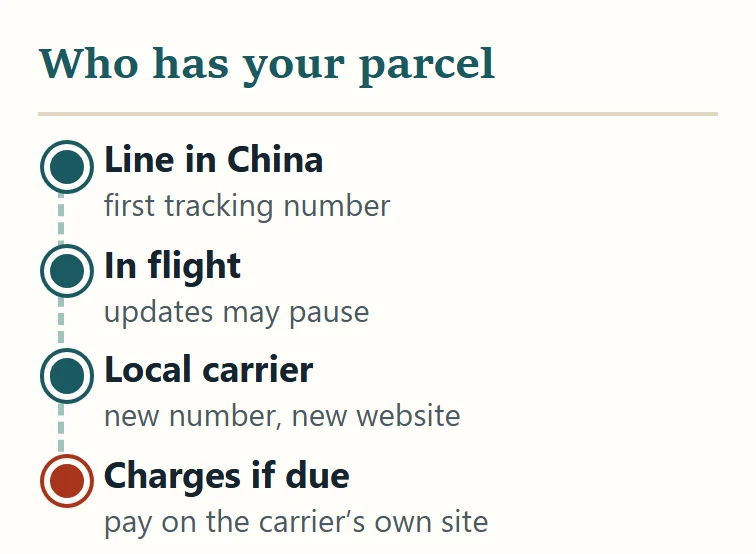
Most lines pass the parcel to a carrier in your country for the final stretch. At that moment your parcel often gets a second reference on the local carrier’s website, and the old page stops updating. The agent’s tracking page or the line’s own site usually shows the new reference.
If import duty or tax is due, the local carrier normally collects it, by message or at the door. Rules and amounts depend on your country and change over time, so read your government’s customs pages rather than a forum post. We do not give figures. Pay only through the carrier’s official site or app, reached by typing its address yourself.
One address, read in two countries
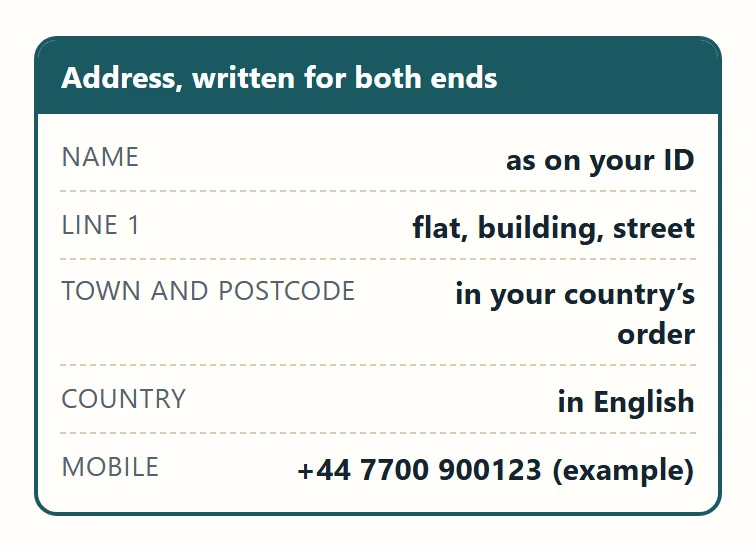
Your address is read twice: by a warehouse in China printing a label, and by a driver in your own country. Write it in Latin letters, in the order your local post expects, with the postcode exactly right. Add a mobile number with its country code, because local carriers text or call before delivery and some will not deliver without one.
Use the name that matches your identity documents if you might collect from a depot. Flat numbers, building names and entry codes belong on the address lines, not in a delivery note that a label printer may cut off. Once a parcel has left China, changing the address is hard, so check it before you pay for the line.